Does leadership development with horses work? The evidence
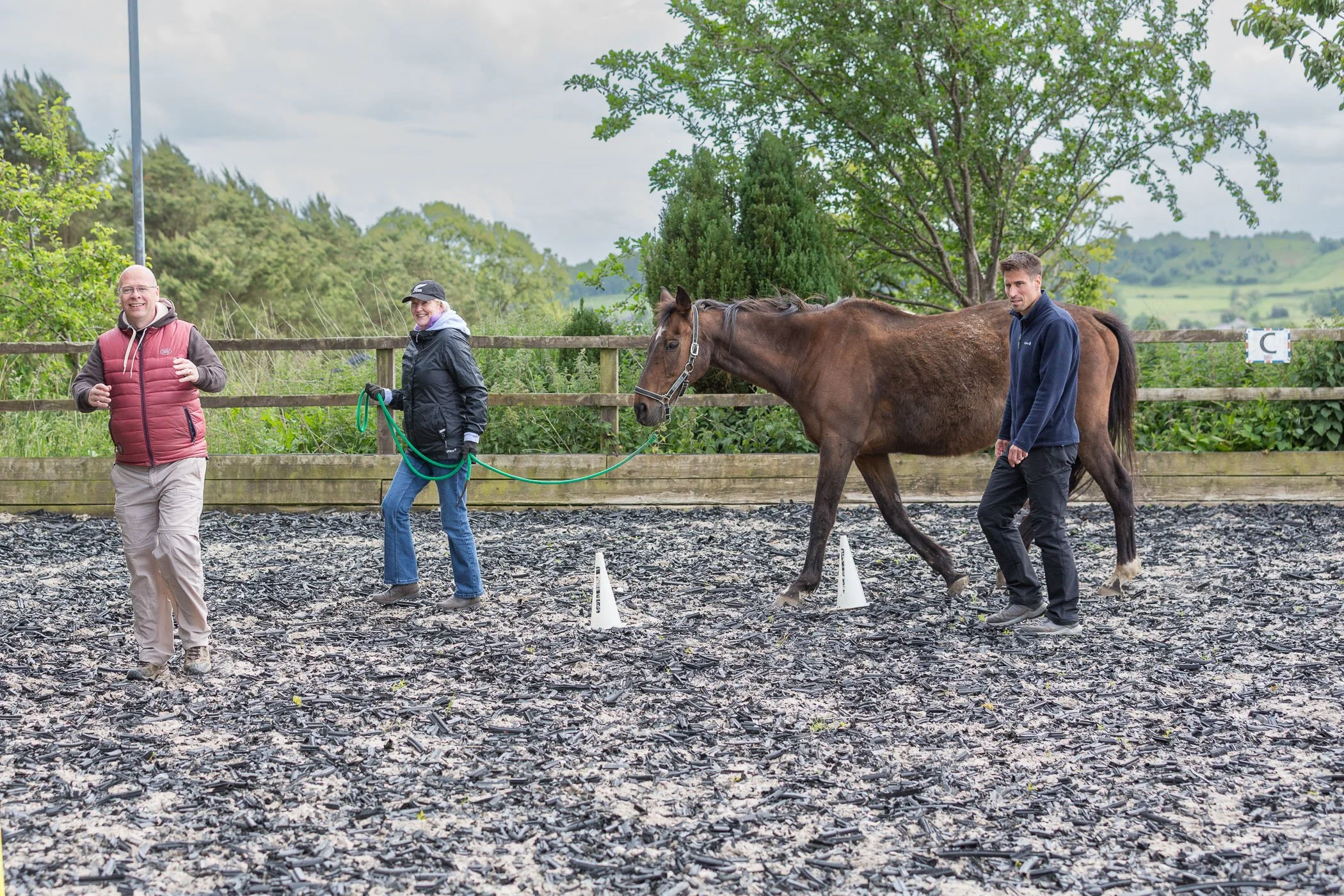
A team work with a horse called Tiffin
Leadership development with horses works because it changes behaviour rather than adding knowledge, and the change sticks because leaders practise it in the moment. The evidence is commercial and behavioural: a loss-making division back in profit within three months, sales teams that hit targets after ten months of missing them, and a motor retailer pilot that grew from one site to multiple stores.
Why doesn't conventional leadership development change behaviour?
Most leadership development delivers more knowledge. Leaders leave able to describe delegation, difficult conversations, and psychological safety, and then under pressure they revert to the unconscious default patterns of behaviour they arrived with. The gap is behavioural. Leaders already understand the ideas. What they can’t do is keep the ideal behaviours when the pressure is on, which knowledge does not change. This is why Heads of L&D who have run psychometrics, cognitive programmes, and off-sites still find their employees don’t lead differently after training. They have invested in understanding and knowledge, but change only happens through practice and embodied experience.
What does the evidence actually show?
The clearest evidence is what changes in the business afterwards, months after the day itself. A loss-making division returned to profit within three months of a single one-day workshop. Three sales managers who had not met their targets for ten months all met them the following month, and sustained that for the following months. A CEO stuck in operational detail became strategic enough to grow and sell his business within a year. A motor retailer that piloted the work at one site expanded it to multiple stores, which is the plainest evidence there is: a commercial buyer does not scale something unless it produces a return.
Across fifteen years and more than five thousand leaders, the pattern repeats. The results are promotions, revenue changes, and cultural change, not satisfaction scores from the day.
Why does working with horses change behaviour when a classroom doesn't?
A horse responds to nonverbal behaviour and energy, not to words or seniority, so they give a leader immediate feedback on their actual impact rather than their intended one. That feedback can’t be debated, and it arrives in the body before the mind has time to explain it away. The horse is either engaging or not, all based on whether they feel safe to follow. The leader then practises a different behaviour with the horse until the horse engages, so they leave having already embedded the new behaviour, not having heard about it. Behaviour changes because it has been rehearsed with real and instant feedback, which is the one condition a classroom cannot reproduce.
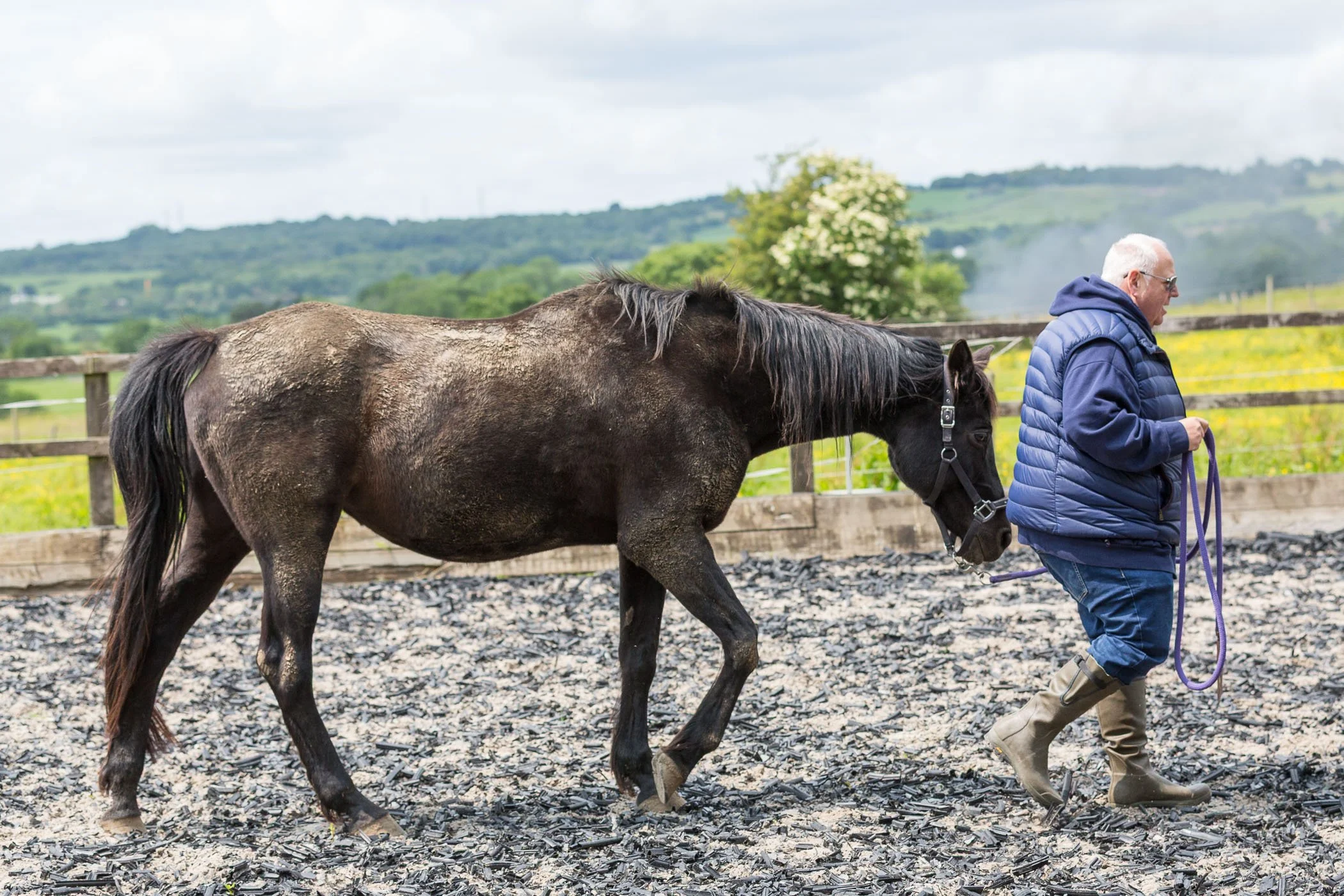
A man leads a horse called Gloriana
Is this relevant when the business is undergoing so much change?
It matters more, not less. Forecasts and plans can’t be extrapolated from the past when the world is changing so fast. Leaders who rely solely on plans and preparation lack the adaptability and flexibility to innovate when change is constant. In uncertainty, leaders often deafult to their unconscious patterns of behaviour, precisely when they most need to be present and adaptable. Developing the capacity to notice your own patterns and adapt quickly in the moment is exactly what horses enable you to do, preparing leads for the exact conditions of leading through uncertainty.
How is this measured with a specific team?
Behavioural outcomes are agreed against the client's brief at the outset, and the standard is whether those outcomes materialise in the business, not whether the day went well. Promotions, targets met, teams delivering ahead of plan, and leaders who stop taking responsibility for every decision are the measures. The work meets a commercial brief and is judged commercially.
How do you find out whether it would work for your team?
The honest way to test the evidence is against your own situation. Book a consultation with Jude to talk through what your leaders are struggling with and whether leadership development with horses would produce the change you need.
Jude Jennison is the Founder of Leaders by Nature, an executive leadership and team coaching business working with blue-chip organisations and fast-growing entrepreneurial businesses. She helps CEOs and HR leaders change how leaders and teams behave under pressure and in uncertainty, creating pattern interrupts with a herd of horses who reveal the nonverbal behaviours that drive performance. A former IBM leader with a $1 billion budget, she has developed more than 5,000 leaders and written three books. She is also the creator of Ask Opus, a critical thinking tool that enables leaders to change behaviours.