

The Leaders by Nature Approach
Most leadership development adds to what leaders know. It rarely changes what they do under pressure, which is the only thing their team experiences. The Leaders by Nature Approach changes behaviour, not knowledge, through experiential learning with a herd of horses who give leaders instant feedback on the nonverbal behaviour that drives their results, so they lead differently and it lasts.
Who is Jude Jennison?
Jude Jennison is the Founder of Leaders by Nature, an executive leadership and team coaching business. She helps CEOs and HR leaders change how leaders and teams behave under pressure and in uncertainty, creating pattern interrupts with a herd of horses who reveal the nonverbal behaviours that drive performance.
A former IBM leader with a $1 billion budget, she has developed more than 5,000 leaders and written three books.
Jude is also the creator of Ask Opus, a critical thinking tool that enables leaders to change behaviours.
Why doesn’t leadership training change behaviour?
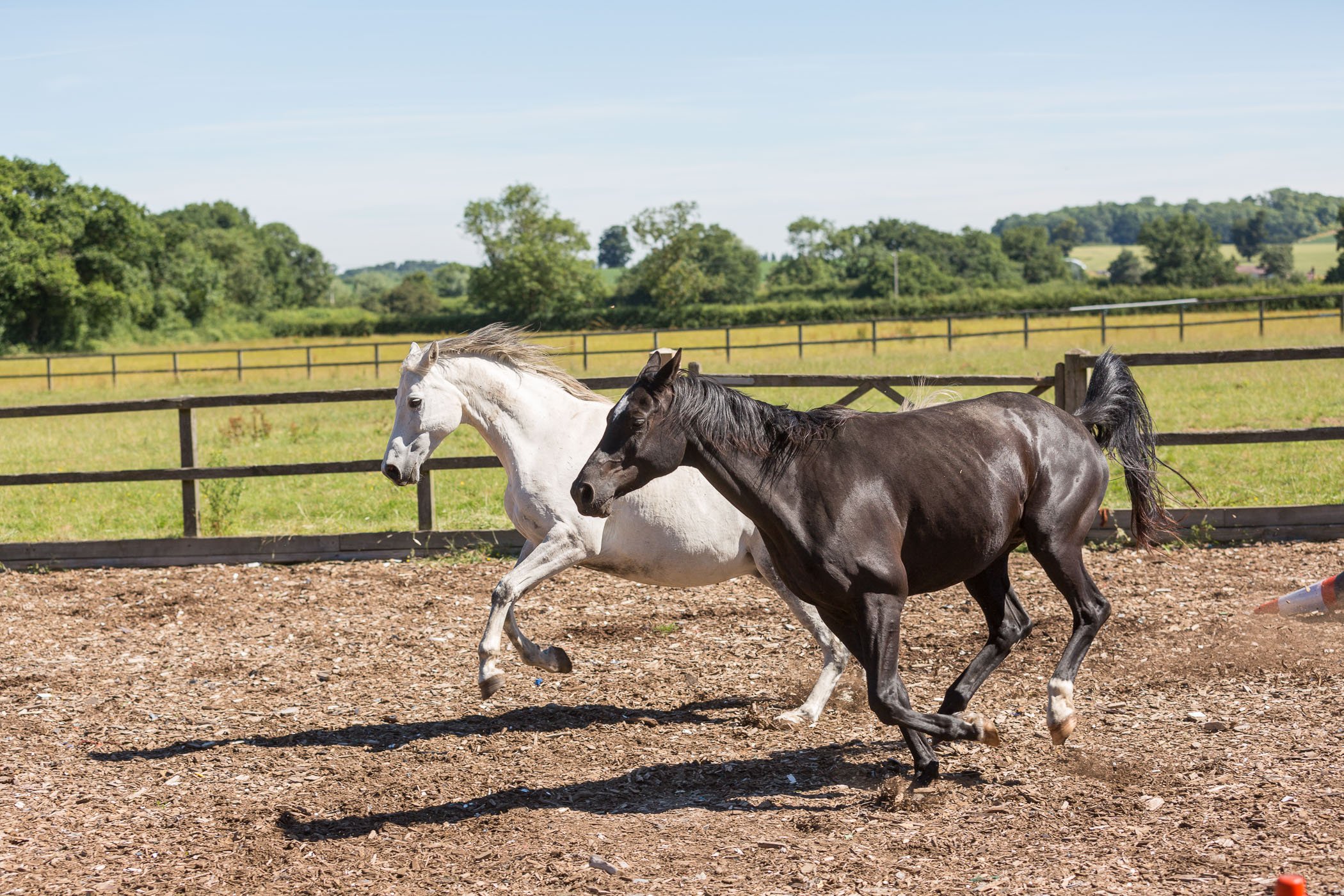
Because knowing is not doing. Under pressure, leaders run automatic, unconscious behaviours that fire before thinking catches up, and no amount of knowledge changes an automatic behaviour. Only practising a different one does. Working with horses is a pattern interrupt: leaders see the gap between what they intend and what they actually do, in the moment, and practise leading differently before the old habit closes back over it. For what that looks like in practice, see Why Horses.
What is experiential learning, and why does it work?
Experiential leadership development means learning to lead by doing, reflecting on what happened, and changing what you do next, rather than being taught intellectually about leadership and hoping it carries over. It is not a softer alternative to rigour. It rests on a substantial body of research, and is the foundation of the Leaders by Nature Approach.
David Kolb set this out in Experiential Learning: Experience as the Source of Learning and Development (1984). He describes learning as a cycle: you have a concrete experience, reflect on it, make sense of it, then experiment with a different approach. Insight on its own does not change behaviour. The cycle does, because you practise the change rather than only understanding it.
Leaders learn far more from doing than from being taught.
This is the evidence base beneath the Approach: behaviour changes through experience, reflection, and practice under real conditions, and rarely through information alone.
What frameworks does Jude use?
The OPUS Method is a six-month behaviour-change programme based on the book OPUS: The Hidden Dynamics of Team Performance. It works through the twelve nonverbal dynamics that most shape whether a team performs:
The Organisation Model describes leading from the front (clarity and direction), the middle (execution, collaboration, and support), and the back (accountability across the whole system). Most teams lead least well from the front, rarely from the back, and get dragged more into the middle where operational decisions are made.
The Pillars of Vitality reframe wellbeing as a leadership behaviour rather than an initiative: leaders influence their team's physical and mental health through their own energy, emotions, and presence.
The Understanding Model develops three kinds of awareness: self-awareness, relational awareness, and field awareness of the wider system and market, enabling information to guide decisions in uncertainty.
Leading Through Uncertainty, from the book of the same name, sets out the challenges, emotional responses and skills leaders need when the plan and reality are rarely the same.
Does leadership with horses work?
Yes, when it is judged by behaviour change and business results rather than satisfaction scores. Because the feedback lands in the moment, leaders change what they do, and the change carries back to work.
Client results include:
a loss-making division returned to profit within three months
a management buy-out team delivering their plan a year ahead of schedule
an SME grown from 25 to 40 employees in a year
delegates gaining promotions ahead of expectation
teams resolving conflict, communicating better, and growing the business
sales increasing through a more confident, empowered, and aligned team
Who is this for, and what result does it get?
Heads of Learning and Development in large corporates, HR leaders in fast-growing SMEs, and CEOs and MDs of mid-sized companies who need to change their own behaviour or their senior team's.
It is for people who have already tried psychometric testing, off-sites, and cognitive learning programmes, and found that knowing more did not change how anyone behaves under pressure.
The books
Jude Jennison is the author of three leadership books: Leadership Beyond Measure, Leading Through Uncertainty and OPUS: The Hidden Dynamics of Team Performance.
What is Ask Opus?
Ask Opus is a story-based, critical thinking tool, to help leaders and teams change behaviours.
It delivers a daily leadership nudge, drawing on a library of real leadership stories and an engine that matches a relevant story to the challenge a leader is facing that day.
For a leader who will never get to the stables, it creates the change on its own, one prompt and one story at a time.
For a leader who has done the experiential work, it sustains the change so it compounds rather than fading after a workshop. Either way, it is the part of the Leaders by Nature Approach that makes behaviour change continuous and organisation-wide, at a scale in-person work alone cannot reach.
How do I work with Jude?
Whether you want to align a senior team, develop your leaders through the OPUS Method, coach one leader through a specific challenge, or change behaviour across a whole organisation with Ask Opus, the starting point is the same.