What is equine-facilitated leadership? The definitive guide to Leadership with Horses
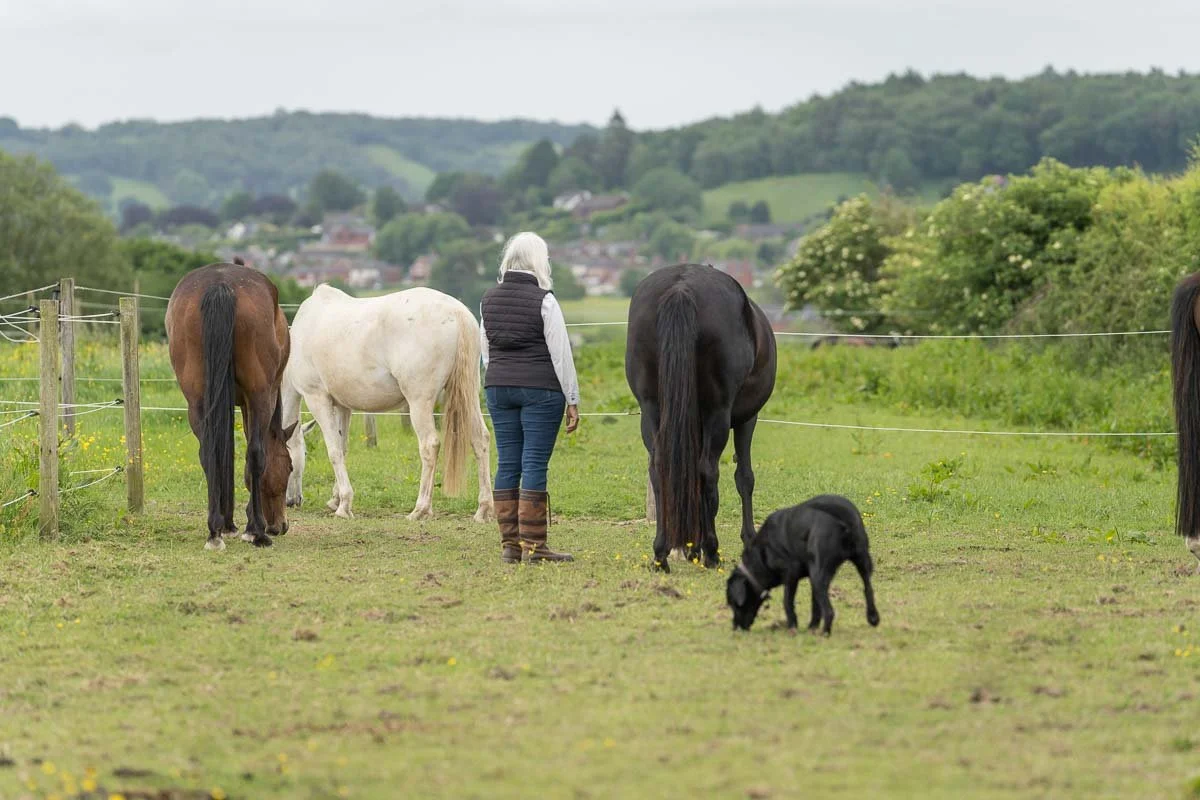
Jude Jennison stands in a field with her horses and black Labrador dog
Equine-facilitated leadership is ground-based leadership and team development in which horses give leaders immediate, unfiltered feedback on the nonverbal behaviour that drives their decisions. Because horses respond to a person's energy and intention rather than their job title or their words, they reveal the gap between how a leader believes they lead and how they actually lead under pressure.
What is equine-facilitated leadership?
Equine-facilitated leadership, also called leadership with horses, is experiential development delivered on the ground with a herd of horses. There is no riding involved. Leaders and teams work alongside the horses on the ground on simple leadership and team tasks, and the horses respond in real time to your energy and nonverbal behaviour. The horse’s response is the feedback. A horse has no interest in your seniority, your reputation, or what you meant to convey. It reads what you are actually doing, and it responds based on that.
Most of the decisions leaders make are driven by nonverbal behaviour they are not aware of. In a workshop, a psychometric, or an off-site, that behaviour stays hidden because everyone is polite and people become good at masking behaviours in order to fit in. A horse does not adapt their behaviour and does not pretend. They give you the one thing a human facilitator cannot: honest feedback on your impact, in the moment, with nothing softened and without judgment or criticism. When a horse says no, the message is clear: you need to change your behaviour to get them to engage.
Why do horses reveal what people cannot?
The people around a leader learn early what that leader is like under pressure, and they adjust. They stop bringing certain things up. They wait to be asked. They read the leader's nonverbal signals and respond to those, not to the words. Over time everyone forgets they are doing it, and the leader is left with a picture of themselves that no longer matches their actual impact.
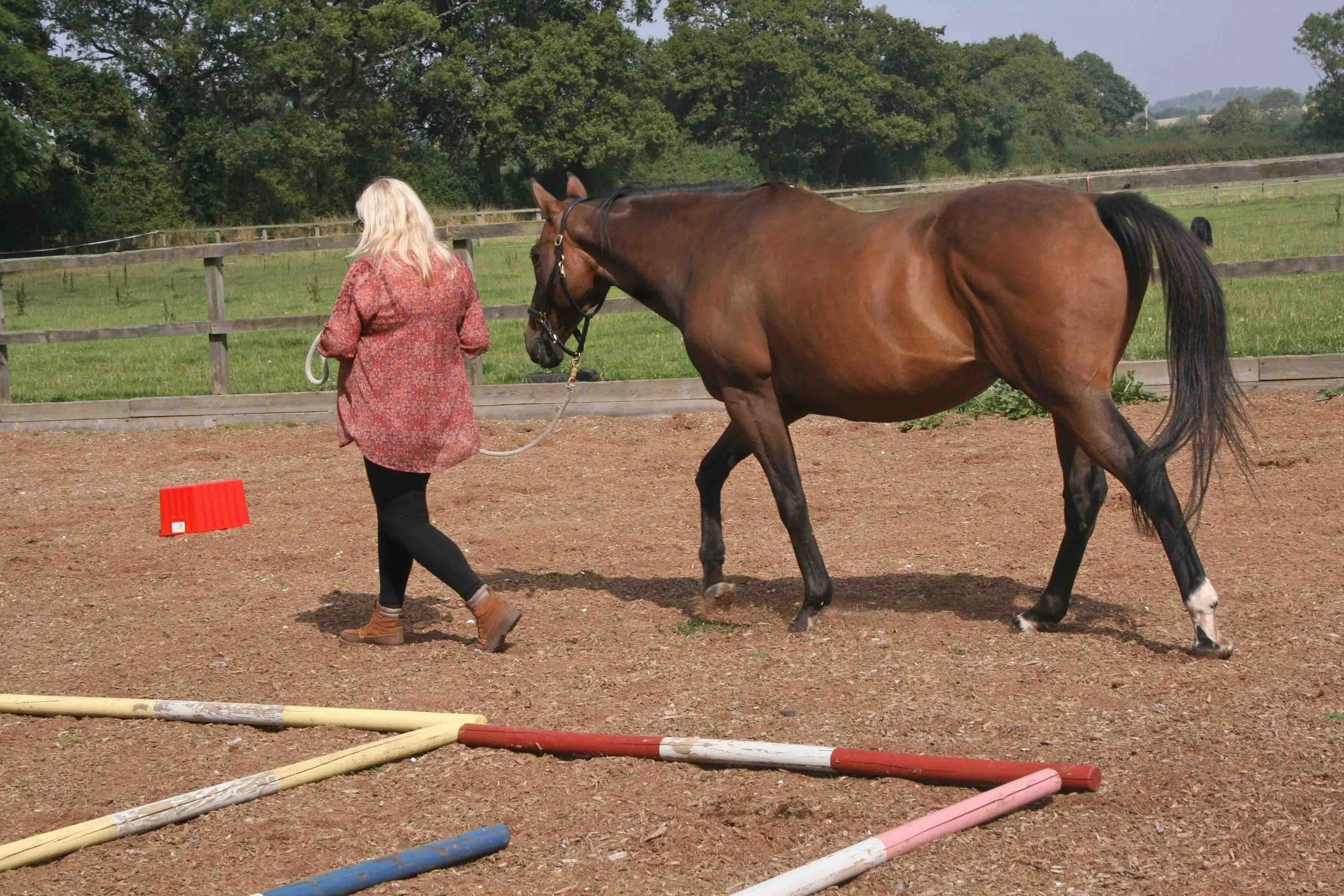
A horse responds based on how you make them feel. When John led one of the horses by holding the rope tight and trying to be in control, the horse headbutted him and refused to engage. John said afterwards that he thought it had gone well, that he had got the job done, and he had not noticed the horse’s resistance at all. He had reecived the same feedback from his team for years and had never heard it. The moment he lengthened the rope, relaxed, and invited the horse to walk with him, she went willingly. Nothing about the horse changed. His behaviour did.
What does a session actually involve?
The work is practical and relational. Leaders build a relationship with a horse and complete straightforward tasks with them, and I explore what happens between the person and the animal through coaching and discussion. A leader experiences what they already know about good leadership, sees where their behaviour departs from it under pressure, and then practises a different way until the new behaviour sticks. The gap between intention and impact is exposed by the horse, and leaders practise changing their behaviour on the spot rather than reading about it and hoping it transfers on Monday.
How does the Organisation Model appear in the work?
The Organisation Model describes three places a leader operates from: the front, which is clarity and direction; the middle, which is execution, collaboration, and support; and the back, which is accountability across the whole system. Most teams lead least well from the front, rarely lead from the back, and get dragged more and more into the middle where the operational decisions are made. When nobody in the team holds them accountable, the person at the front absorbs everything and then wonders why the team don’t step up and take more responsibility.
The horses make this visible in minutes. A team that is out of sync, each person pulling in a slightly different direction, will find a horse closes its eyes and tunes them all out. When they align in one direction and move together, the horse goes with them. Leaders feel the difference in their bodies before they can explain it, which is why it changes behaviour when a powerpoint doesn’t. Leaders don’t need more information. They need clarity on their impact and the chance to explore new ways of leading in a psychologically safe space.
Does it produce commercial results?
It does, and the results are behavioural and measurable rather than a nice day out. One loss-making division returned to profit within three months of a single day's work. Three sales managers who had missed their targets for ten months all hit them the following month and sustained that performance for the following months. A motor retailer pilot expanded from one site to multipe stores. A CEO who could not get out of the operational detail became strategic enough to grow and sell his business within a year. The standard is set by the outcome months later, not by what happens in the arena on the day.
Who is it for?
It is for CEOs and MDs stuck in the detail, senior teams that look aligned but are not saying what they think, and leaders known for being too aggressive or too accommodating. This is experiential development measured on commercial outcomes, and the behaviour a leader shows with a horse is the behaviour their team lives with every day.
It is also for Heads of Learning and Development in large organisations and HR leaders in fast-growing entrepreneurial businesses who have already tried psychometrics, cognitive programmes, and off-sites and found that people understand the theory and still don’t change.
How do you start?
If your leaders know what good looks like and still revert under pressure, the fastest way to understand what equine-facilitated leadership would change for your team is a consultation. Book a consultation with Jude to talk through your situation and whether this is the right approach.
Jude Jennison is the Founder of Leaders by Nature, an executive leadership and team coaching business working with blue-chip organisations and fast-growing entrepreneurial businesses. She helps CEOs and HR leaders change how leaders and teams behave under pressure and in uncertainty, creating pattern interrupts with a herd of horses who reveal the nonverbal behaviours that drive performance. A former IBM leader with a $1 billion budget, she has developed more than 5,000 leaders and written three books. She is also the creator of Ask Opus, a critical thinking tool that enables leaders to change behaviours.