The twelve hidden dynamics of team performance - or what’s not being said
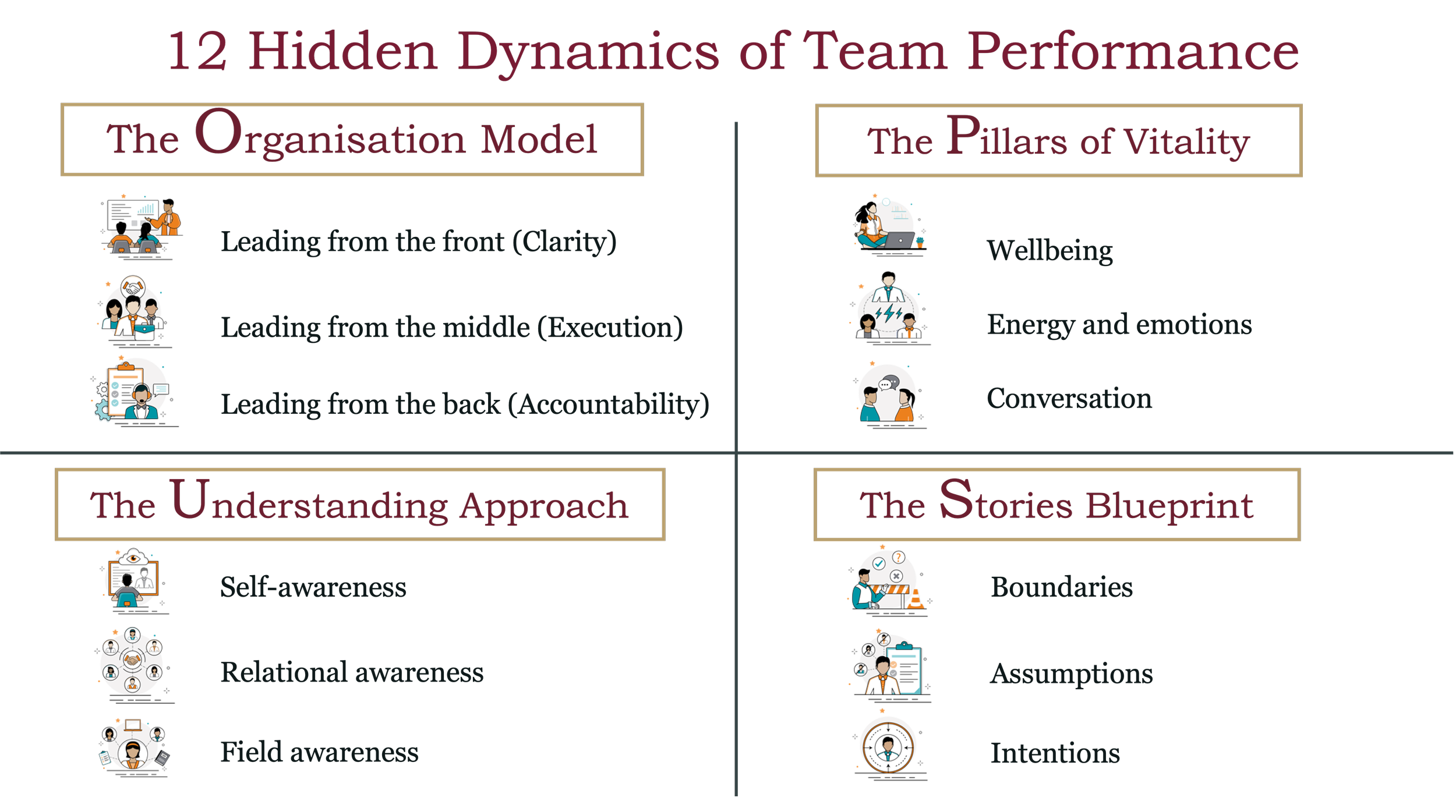
Team performance comes down to behaviour. A team underdelivers because of what its team members do under pressure, and that behaviour is visible long before it reaches the numbers or results. I’ve identified twelve hidden dynamics that impact how well a team actually performs, and every one of them can be seen in how people behave when the pressure rises.
What do we mean by a hidden dynamic?
A hidden dynamic is a pattern of behaviour that occurs in a team or relationship without noticing it, and that decides the result more than the strategy does. Two teams can be given the same objective, the same resources, and the same deadline. One delivers and one does not. What decides it is behavioural: how the team communicates when the pressure rises, who defers to whom, what goes unsaid in the room, and where accountability actually lives when a deadline moves. Capability is rarely the constraint.
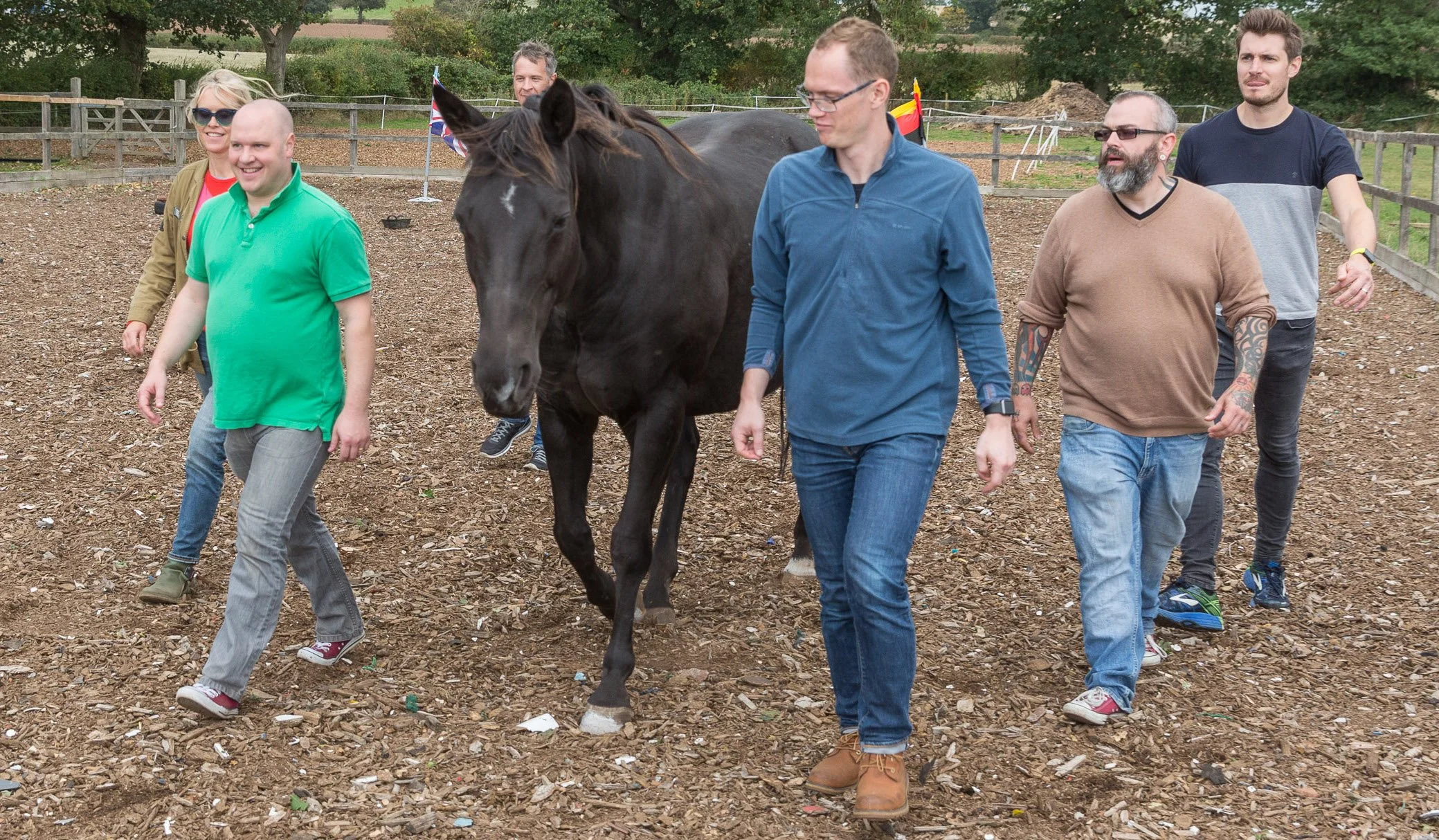
I have spent 15 years watching these dynamics play out with a herd of horses, after 17 years leading at IBM where I saw the same patterns in boardrooms. The horses respond to non-verbal behaviour with no filter and no politics. They reveal the dynamic in seconds, which is why leaders see it with the horses when they have not seen it in years of appraisals and off-sites.
Why do these dynamics stay hidden?
Because they operate below conscious awareness. A software delivery team I worked with built an obstacle course out of poles and cones to represent everything they were juggling, then stood in the middle of it and tried to work out a route through. They went round and round, over-analysing every option, getting nowhere. From inside the problem they could not see the pattern. When they stepped outside the course and looked from the side, they saw the chaos in seconds and realised their pattern to overthink their way out of chaos was not working.
That’s the nature of a hidden dynamic. Standing inside it, the team can’t see it. Everyone works harder on their own work, the detail is concrete and satisfying, and the shared direction is lost without anyone realising it. They just know that everything is hard work. This software team had been known as the one that was always late and never delivered. Within months they were the team that knew its capacity and delivered what it promised. Their skill did not change; their behaviour did.
© Copyright Jude Jennison of Leaders by Nature 2021. All Rights Reserved.
Where do the twelve dynamics appear?
They appear in how a team leads and how people communicate in relationship to each other. The twelve dynamics are hidden because they are nonverbal but if we learn to pay attention better to our own patterns of automatic behaviour, the thoughts and feelings we hold about others as well as ourselves, then we can reveal them and see the impact they have on the decisions we make and the actions we take.
The dynamics appear in teams that look collaborative, but are often protecting their own territory or competing without naming it. They appear in the teams where everything feels hard work, where frustration rises, or everyone works harder. The dynamics appear in wellbeing, because a team that has normalised exhaustion suppresses the very information a leader needs. And they appear in the stories running in people's heads about boundaries, assumptions, and intentions, which shape behaviour before a word is spoken. Most of the time, people believe their own stories to be true, so they stay stuck in tricky relationships because they’ve not realised their own behaviour is impacting the whole.
What changes when a team works on the dynamics rather than the plan?
The results are measurable. A loss-making division returned to profit within three months following a one-day workshop. Three sales managers who had not met their targets for ten months all met them the following month and sustained that performance for five months. A motor retailer pilot expanded from one site to further stores. None of these came from a new strategy. They came from a team changing how it behaved under pressure.
The OPUS Method works through the twelve hidden dynamics across six workshops with coaching between sessions, so a senior team learns to see its own patterns and change them where it counts. It is built on the book OPUS: The Hidden Dynamics of Team Performance, which sets out the full model.
If you lead a team that knows what good looks like and still underdelivers when the pressure rises, read OPUS to understand the twelve dynamics, and speak to me about running the OPUS Method with your team.
Jude Jennison is the founder of Leaders by Nature, author of three leadership books, and ranked Thinkers360 Top 3 globally for Change Management and Leadership.